Is Solar Worth It? A Homeowner's Plain-English Guide to Payback
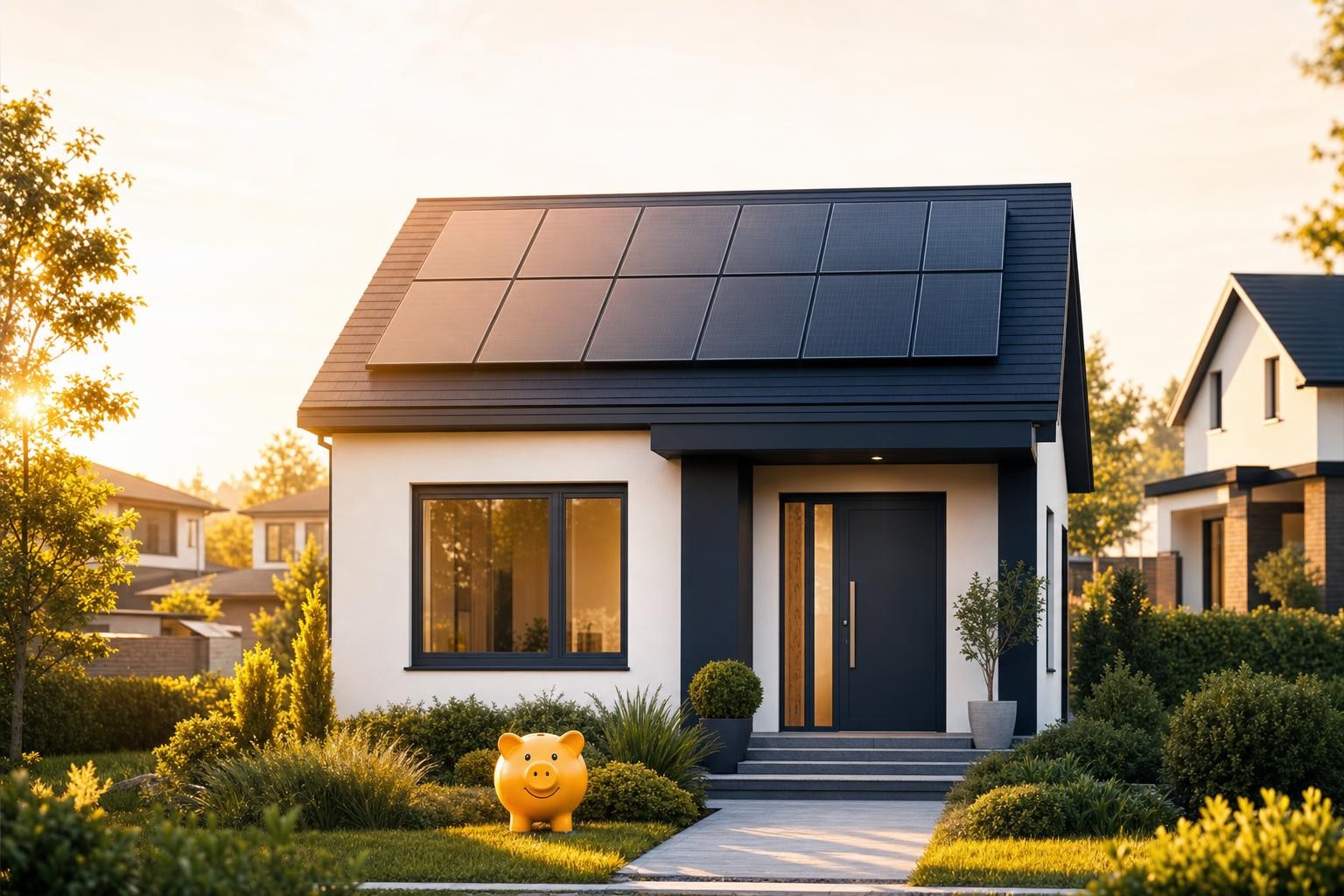
Solar panels have never been cheaper to buy, yet the question every homeowner asks is still the same: will they actually pay for themselves? The honest answer is yes - but the timeline depends on a handful of numbers that are specific to your home, not the national average. This guide walks through each one, simply and without the sales pitch.
The Basic Maths: Three Money Flows
Think of solar payback as three streams of money, all working in your favour at the same time.
1. Electricity you don't have to buy Every kilowatt-hour (kWh) your panels produce and you use directly saves you the full retail price of grid electricity. In Germany that's currently around €0.30-0.38 per kWh; in the UK it's roughly 24-27p per kWh. These are the savings that do the heavy lifting.
2. Export / feed-in payments Any electricity your panels generate that you don't use flows back to the grid, and you get paid for it - but at a much lower rate. In Germany, the EEG feed-in tariff for a typical residential system (up to 10 kWp, partial feed-in) is currently around €0.078 per kWh, locked in for 20 years. In the UK, the old Feed-in Tariff closed to new applicants in 2019 and was replaced by the Smart Export Guarantee (SEG); energy companies now offer SEG export rates ranging from roughly 4p to over 20p per kWh depending on the supplier and tariff you choose.
3. The upfront cost you're paying back This is what you divide by your annual savings to get your payback period. In Germany, a 5 kWp system costs around €7,600 on average in 2026 (range: €5,300-€9,500), while a 10 kWp system runs around €13,300 (range: €10,300-€18,500) - and since 2023, residential solar in Germany attracts 0% VAT. In the UK, 4-10 kWp systems are estimated to cost between £1,400 and £1,600 per kWp installed in 2026, so a typical 4 kWp system lands at roughly £5,600-£6,400.
The golden rule of solar savings: a unit of electricity you use yourself is worth 3–5× more than one you export. Self-consumption is where the real money is.
How Much Will My Roof Actually Generate?
This is where location matters. In Germany, PV systems typically generate around 950-1,050 kWh per kWp per year in the north (Lower Saxony, Schleswig-Holstein) and 1,050-1,150 kWh per kWp per year in the east and south (Bavaria, Baden-Württemberg). The UK sits in a similar band - southern England is closer to 1,000-1,100 kWh/kWp, Scotland somewhat lower.
So a 4 kWp system on a south-facing roof in southern Germany or southern England will produce roughly 4,000-4,600 kWh per year - enough to cover a good chunk of an average household's annual electricity use.
Roof orientation matters too, but less than people fear. East- and west-facing roofs still deliver around 80-85% of the output of a south-facing system, and they spread generation more evenly across the day, which can actually suit households that use power in the morning and evening.
A Worked Example
Let's put some real numbers together for a typical 4 kWp system.
| Item | Germany (ballpark) | UK (ballpark) |
|---|---|---|
| System cost (installed) | ~€8,000 | ~£6,000 |
| Annual generation | ~4,200 kWh | ~3,800 kWh |
| Self-consumed (40%) | ~1,680 kWh | ~1,520 kWh |
| Savings from self-use (at ~€0.34 / 25p) | ~€570/yr | ~£380/yr |
| Export income (60% exported, ~€0.08 / 6p) | ~€200/yr | ~£140/yr |
| Total annual benefit | ~€770/yr | ~£520/yr |
| Estimated payback | ~10–11 years | ~11–12 years |
These are conservative estimates assuming only 40% self-consumption - a typical figure for a household where most people are out during the day. Shift some appliances to daylight hours and the numbers improve noticeably.
The Two Biggest Levers You Can Pull
1. Use more of your own solar during the day
Homes that use more daytime electricity or have battery storage tend to hit payback in 6-7 years, while low-use homes average 8-9 years. The difference between 40% and 75% self-consumption on a 10 kWp system in Germany is roughly €800 per year in additional savings - that's around 1.5-2 years off your payback period.
Practical ways to shift consumption into solar hours:
- Run the dishwasher and washing machine during the day
- Set your hot water cylinder (if you have one) to heat between 10am and 3pm
- Charge an EV at home during daylight hours
- Use a smart plug timer on any high-draw appliance
2. Add a home battery - but go in with eyes open
A home battery stores surplus solar generated at midday and lets you use it in the evening, pushing self-consumption from around 30-40% up to 60-80%. That's genuinely valuable. The honest trade-off is that the battery adds upfront cost.
A 5-10 kWh battery installed in Europe typically costs €5,000-€12,000 all-in, and adding battery storage typically extends the overall payback period by 2-4 years because the extra cost outweighs the faster savings - at least in the early years. Over the full 25-year life of the system, a battery usually makes financial sense for households with high evening consumption, time-of-use tariffs, or an EV to charge overnight.
Battery sense-check: If you're mostly home during the day already, a battery adds less value than it would for a household that's out all day. The Solar Roof Planner includes a battery sense-check so you can see whether storage stacks up for your usage pattern.
What's a Realistic Payback Period?
Germany and the UK both average 8-12 years for residential solar payback in 2026, based on data from multiple industry sources. Within that range:
- Faster end (7-9 years): South-facing roof, high daytime usage, southern location, competitive installer quote
- Middle (9-11 years): Mixed orientation, average daytime usage, mid-range install cost
- Slower end (11-13 years): North-facing or heavily shaded roof, low daytime usage, premium system cost
After payback, most solar panels carry a 25-year performance warranty and last 30 years or more - so even a 10-year payback leaves you with 15-20 years of very low-cost electricity. Over a 25-year lifetime, a well-placed UK system could save £25,000-£30,000 in today's money.
Try the Solar Roof Planner - Your Numbers in Minutes
The ballparks above are a useful starting point, but your roof is unique. The angle, the shading from that tree next door, your actual electricity bill, whether you work from home - all of it shifts the numbers.
Trace your roof on a satellite map, enter a few details, and get a personalised estimate of panels, yearly output, savings, payback period, and a battery sense-check — completely free, no sign-up needed.
Try the Free Solar Roof PlannerFrequently Asked Questions
Do solar panels work on cloudy days?
Yes — panels generate electricity from daylight, not direct sunshine. Output is lower on overcast days (roughly 10–25% of peak), but Germany and the UK still get enough annual sun to make solar financially worthwhile, as the payback figures above show.
What happens to the electricity I don't use and don't export?
Nothing is wasted — your inverter automatically balances what the panels produce against what your home is drawing at that moment. Any surplus flows to the grid (and earns you an export payment); any shortfall is topped up from the grid as normal.
Is a south-facing roof essential?
It gives the best output, but east- and west-facing roofs still deliver around 80–85% of a south-facing system's annual yield. A good installer will model your specific roof before quoting.
Will solar panels increase my home's value?
Evidence from the UK suggests solar-equipped homes can attract a premium and improve EPC ratings, which matters for mortgage lenders and future buyers. The effect varies by location and market conditions.
How do I know what size system I need?
A rough rule of thumb is to match system size (in kWp) to roughly 80–100% of your annual electricity use divided by your expected yield per kWp. The Solar Roof Planner does this automatically once you trace your roof and enter your annual usage.