Solar Plus an EV Charger or Heat Pump: Getting the Most From Every Sunny Hour
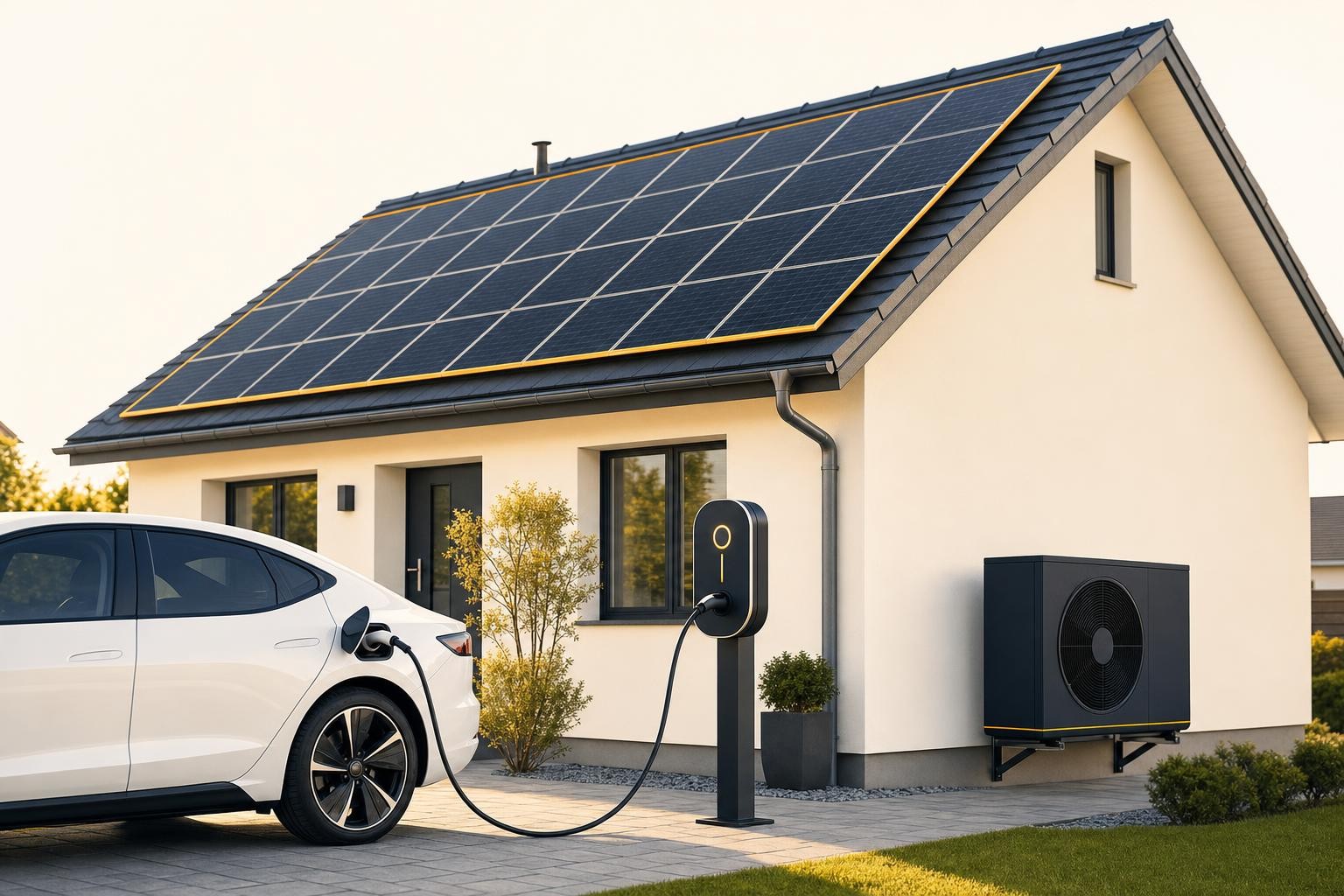
Here is the thing most people miss about solar: the panels themselves are only half the story. The real savings come from using the power you make, right when you make it. That is called self-consumption, and it is where an EV charger or a heat pump turns out to be your solar system's best friend.
Let us keep this simple.
Why using your own power beats selling it
When your panels produce more than your home needs, the surplus flows to the grid and you get paid an export rate for it. That is nice, but the export rate is almost always lower than what you would pay to buy that same unit back later. So every kilowatt-hour you use yourself is worth more than one you sell.
A typical home without a battery only uses about 40-50% of what its panels make[1]; the rest is exported. Add smart timing and the right appliances, and you can push self-consumption up towards 70-80% without spending a cent on storage[1].
An EV charger: your biggest, friendliest battery
If you drive an electric car, you are already carrying a large battery around. Charging it during the middle of the day, when your panels are humming, is one of the easiest wins in home energy.
A car driven average distances uses roughly 3,000-4,500 kWh of electricity a year[2], a big chunk of what a typical home array produces. A smart charger can be set to top up only when your panels have spare power, so you are driving on sunshine rather than grid electricity. Over the years the savings really add up compared with charging from the grid, let alone filling up with petrol or diesel.
A heat pump: soaking up solar you would otherwise export
Heat pumps run on electricity, which makes them a natural partner for panels. On a sunny day, a smart setup can tell the heat pump to warm your hot-water tank or nudge up your heating exactly when there is surplus solar, storing that energy as heat instead of sending cheap power to the grid.
The two do not overlap perfectly: heat pumps work hardest in winter, when solar output is lowest. But across spring, autumn and milder winter days, a good chunk of your heating and hot water can run on your own electricity, and that steadily chips away at your biggest energy bill.
Simple ways to run on sunshine
You do not need a complicated system to benefit. A sensible order of priorities, from best return to nice-to-have:
- Hot water first. A timer or a solar diverter sends spare power to your immersion heater or heat pump tank. Cheap to set up, works every sunny day.
- EV charging next. Schedule your car to charge in the solar window, roughly 10:00 to 15:00.
- Then the heat pump, set to make heat when the sun is up.
- Finally the everyday stuff: run the dishwasher and washing machine at midday rather than in the evening.
Shifting your big loads into the sunny middle of the day can save a typical 6 kWp home a few hundred euros or pounds a year[1], no battery required. A battery can push self-consumption higher still, but start with timing, because it is free.
The bottom line
Solar pays best when it powers your own life: your car, your hot water, your heating. If you are planning any of these upgrades, it is worth sizing them together rather than one at a time.
Curious what your roof could actually produce, and how much of it you could use yourself? Enter your address and trace your roof with the free Solar Roof Planner for a realistic estimate of panels, output and savings. No sign-up, no pressure.