Home Batteries in 2026: When They Pay Off - and When They Don't
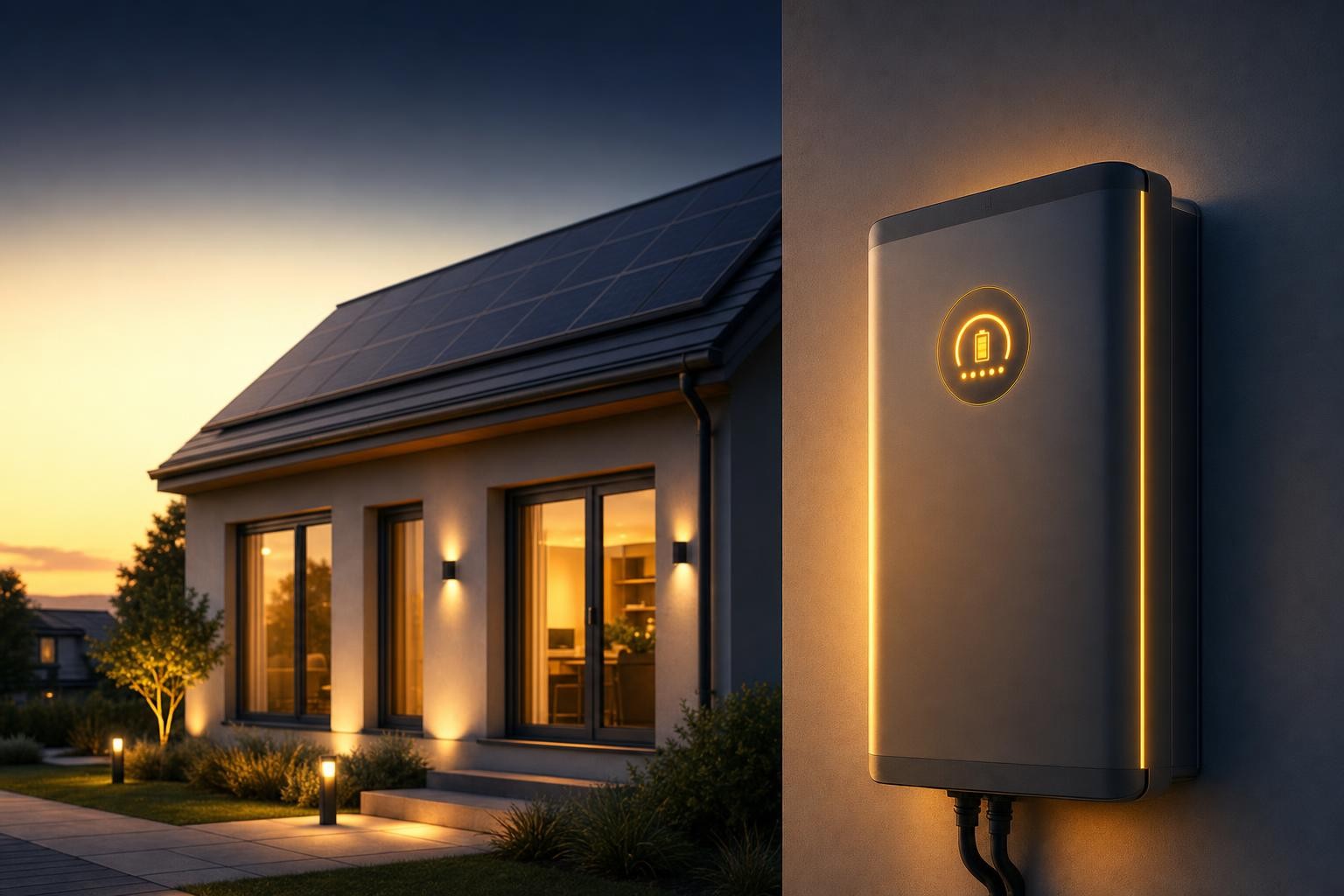
A home battery is the upgrade almost everyone asks about after solar. It's easy to see why - the idea of storing your own sunshine for the evening is lovely. But batteries are also the part of a home-energy setup where the money question is trickiest. So let's be straight with each other about when a battery genuinely pays off, and when your cash is better spent elsewhere.
What a battery actually does for you
Solar panels make the most power in the middle of the day, but most households use the most power in the morning and evening. Without a battery, that midday surplus gets exported to the grid for a modest payment. A battery lets you store it and use it later - so instead of buying expensive grid electricity at 7pm, you're using your own free solar you banked at noon.
That's the whole game: a battery turns exported units (worth a little) into self-consumed units (worth the full retail price). The bigger the gap between what you pay for grid power and what you're paid to export, the more a battery is worth.
When a battery tends to pay off
Your electricity is expensive and your export rate is low. This is the sweet spot. When grid power costs a lot and exporting earns little, every unit you shift from "export" to "use at home" saves you real money.
You use a lot of power in the evening. Families who cook, run appliances and charge devices after sunset get the most from stored solar, because there's plenty of evening demand for the battery to cover.
You're on a time-of-use tariff. Some tariffs let you charge the battery from cheap overnight electricity and use it during pricey peak hours - even beyond your solar. Paired with solar and a smart tariff, UK setups can pay back in roughly 6 to 8 years on a flat tariff and a bit faster on a smart one[1]. On a typical home, adding a battery lifts annual savings by around £200 to £400 a year over solar alone[1].
When a battery is better left for later
Your budget is tight. If you can only do one thing, panels almost always come first - they're what actually generate the savings. A battery is an add-on that improves how much of that solar you keep, not a generator in its own right.
You're out all day and use little in the evening. If your home is empty until late and your evening use is small, there's less stored energy to put to work, so the payback stretches out.
Your export rate is genuinely generous. In places or tariffs where you're paid well to export, the difference between exporting and self-consuming shrinks - and so does the battery's advantage.
A simple way to think about it
Panels are the engine; a battery is a bolt-on that helps you keep more of what the engine makes. For many homes it's a smart addition; for some it's an expensive convenience that pays back slowly. The deciding factors are your electricity price, your export rate, and how much power you use after dark - which is exactly why national averages can't answer it for you.
The good news is you don't have to guess. Try the free Solar Roof Planner - enter your address, trace your roof, and get a realistic estimate of your panels, output and savings, along with a battery sense-check for your specific situation. It's free, no sign-up, and no pressure - just your own numbers so you can decide what's right for your home.