Choosing a Solar Installer: How to Get It Right and Avoid the Common Mistakes
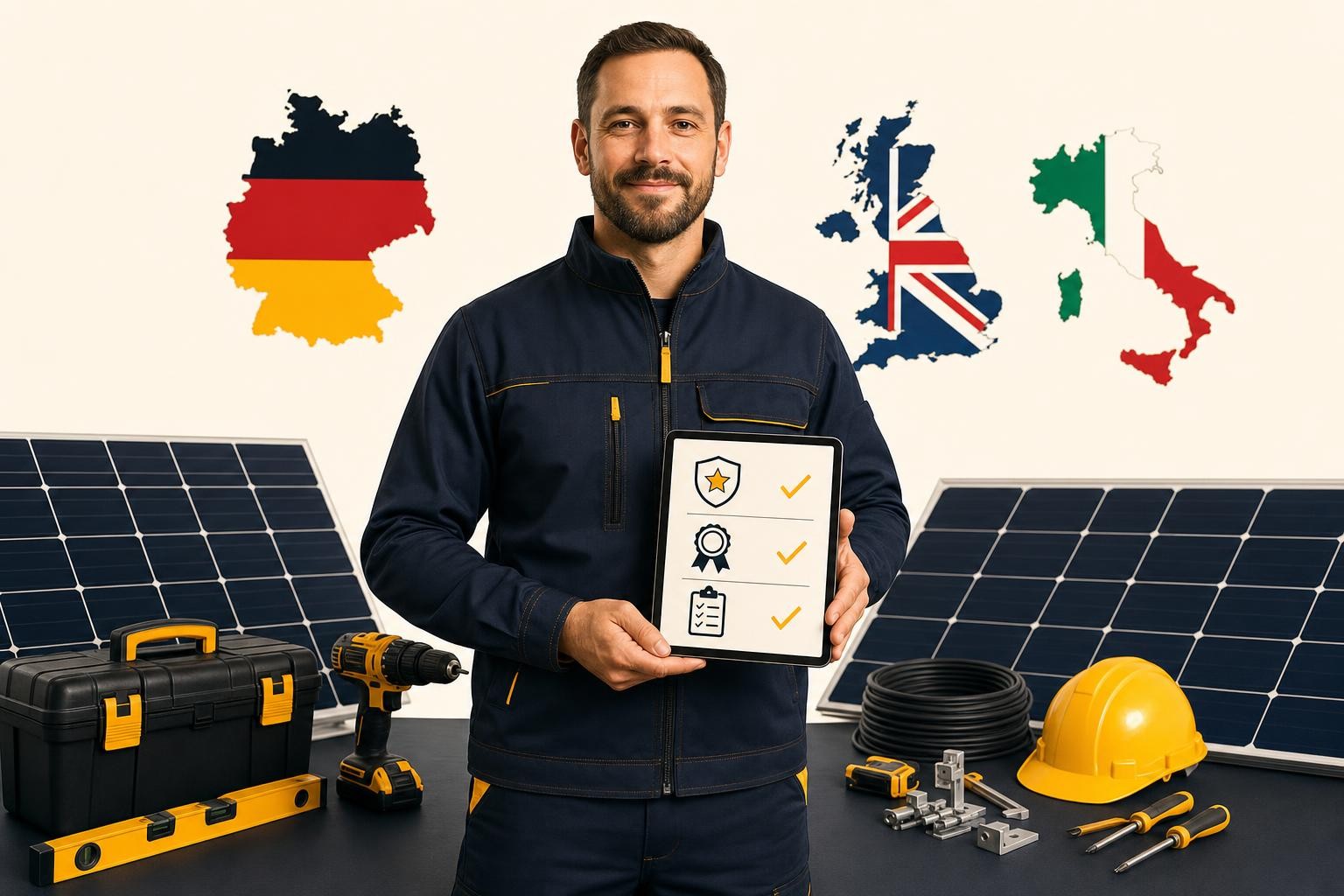
You can buy the exact same solar panels from two different companies and end up with two completely different experiences. The hardware matters far less than the people who design and fit it. A good installer sizes the system for your roof, wires it properly, and is still around if something needs attention in five years. A bad one can void your warranties and leave money on the table. Here is how to tell them apart.
Check the credentials first
Before anything else, make sure the company is properly accredited. It is the single fastest way to filter out the cowboys.
- In the UK, look for MCS certification. It is effectively non-negotiable: without an MCS-certified install you cannot claim the Smart Export Guarantee, and many product warranties will not be valid[1]. Every certified installer has an MCS number you can check on the official MCS register[2]. No valid number, no further conversation.
- In Germany, look for a certified electrical installer registered with the local grid operator (a registered Elektrofachbetrieb), which is required to connect your system legally.
- In Italy, use an installer with the proper electrical certification (the abilitazione under DM 37/2008) so your paperwork and tax deductions hold up.
Wherever you are, check independent reviews from real local customers, not just the glowing testimonials on the company's own website.
Get three quotes, and compare them properly
Always get at least three quotes. But here is the mistake almost everyone makes: comparing only the big number at the bottom[3]. Two quotes can look nearly identical on price while covering very different things.
A proper quote should name the actual equipment, the specific panel, inverter and battery models, not just "premium panels". It should also account for your roof condition, shading, where the inverter goes, cable routes, and how your export meter will be set up[3]. If a quote skips these, it is a guess, not a design.
Be a little suspicious of any price that sits far below the others. It usually means cheaper components, missing work, or corners that will show up later.
Insist on a proper site survey
The best installers do not quote from a satellite photo alone. They visit, or at least do a detailed remote assessment, look at your roof, your fuse board and your usage, and produce a real design rather than a rough estimate. A serious survey is a great sign; a "sign today" quote produced in ten minutes is not.
Red flags worth walking away from
- High-pressure sales and "today-only" discounts. Good solar does not need a countdown timer.
- Quotes that will not name the actual panel, inverter and battery models[4].
- No written contract, or vague terms on warranty and aftercare.
- Reluctance to share their certification number or references.
- Wildly optimistic savings promises that ignore your real roof and usage.
A calm way to start
None of this needs to be stressful. The best first move is not calling a salesperson at all. It is getting your own independent sense of what your roof can do, so you can walk into those conversations informed and confident.
Enter your address and trace your roof with the free Solar Roof Planner to see a realistic estimate of panels, output, savings and payback before you talk to anyone. No sign-up, no pressure, just your own numbers to compare quotes against.