Balkonkraftwerk: Plug-In Solar for Renters in Germany, Explained
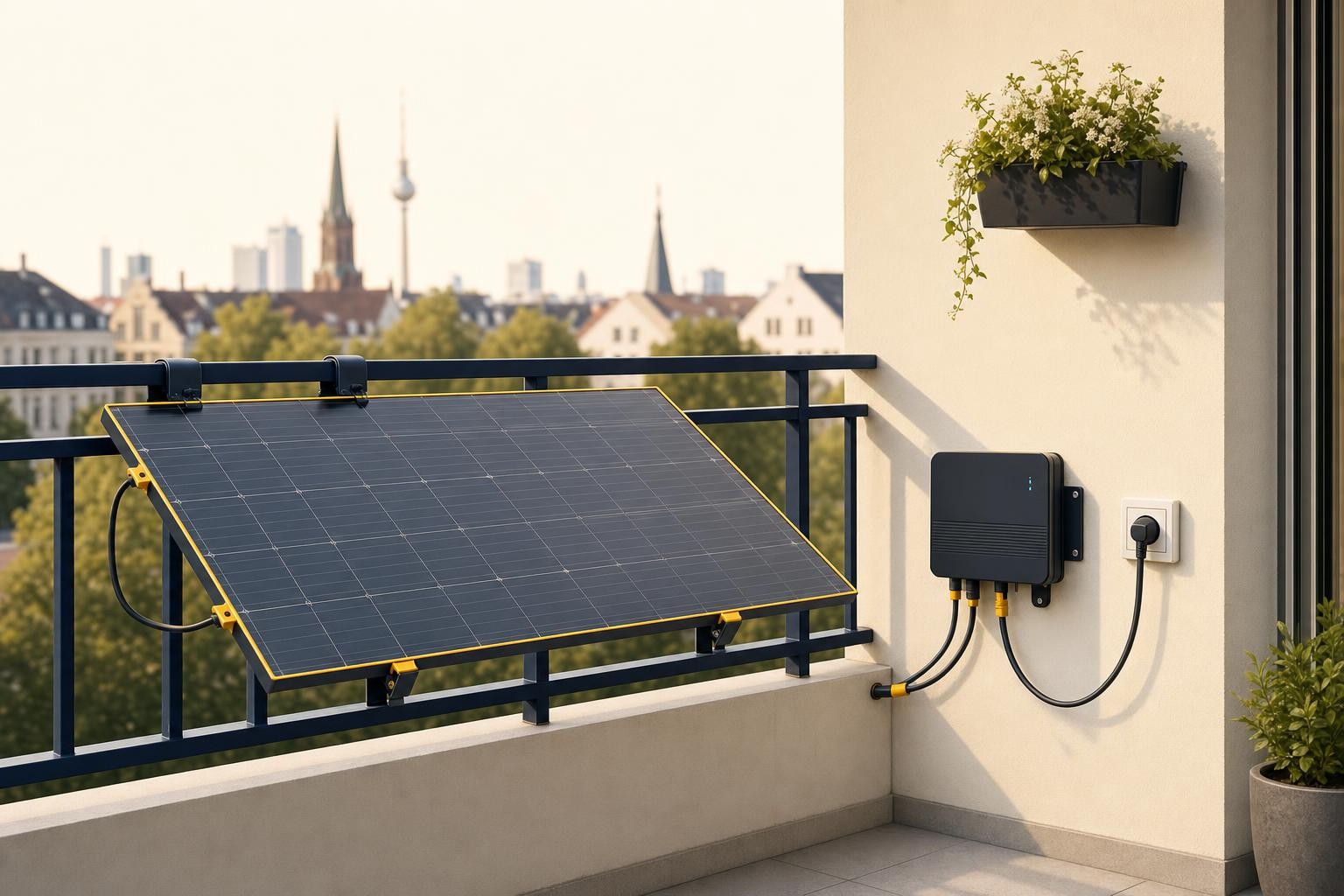
Here's a happy surprise for anyone who rents, or whose roof isn't right for a full solar system: in Germany you can still generate your own solar power. It's called a Balkonkraftwerk - a small plug-in solar setup that hangs on a balcony railing, sits on a flat roof, or leans against a sunny wall. In 2026 the rules are friendlier than ever, so here's the plain-English guide.
What a Balkonkraftwerk actually is
A Balkonkraftwerk (literally "balcony power plant") is one or two solar panels plus a small inverter that plugs straight into a normal household socket. When the sun shines, the electricity flows into your flat's circuit and is used first by whatever's switched on - your fridge, router, standby devices. It quietly shaves money off your bill without you doing anything. It won't power your whole home, but it chips away at the base load that runs all day.
The best part: because it plugs in rather than being wired into your fuse box, you don't need to own the property. It's the one form of solar genuinely open to renters.
What changed in 2026
Two big simplifications make plug-in solar much easier now. First, the inverter output limit was raised from 600 watts to 800 watts[1], so a modern set-up can feed more power into your home. You can install solar modules totalling up to 2,000 watts[2], which helps on cloudy days and in winter when panels underperform.
Second, registration got dramatically simpler. You no longer have to register with your local grid operator - for a typical balcony set-up you only register your system in the Federal Network Agency's Market Master Data Register (MaStR), and you have a month after switching it on to do so[3]. Connecting via a normal Schuko household socket is now expressly permitted too, though if you go that route the module power is capped at 960 watts peak for safety.
Renters have a right to install one
This is the change that matters most if you rent. Since rental and condominium law was updated, tenants and owners now have a right to approval for plug-in solar devices[4]. Your landlord or building association can't simply say no - they can have a reasonable say in how it's mounted (safety, appearance), but the door is open in a way it wasn't a couple of years ago. It's still polite and sensible to talk to them first, but you're no longer starting from "probably not allowed."
Is it worth it?
For most people, yes - modestly. A plug-in kit costs a few hundred euros, and by covering part of your always-on base load it typically pays for itself within a handful of years, then keeps saving after that. The savings are best if you're home during the day or run appliances while the sun is up, since the power is used the moment it's generated. A south-facing, unshaded balcony helps a lot; a north-facing one much less.
Set expectations sensibly: this is a bill-trimmer and a lovely first step into making your own energy, not a replacement for a full rooftop system. But for renters especially, it's one of the easiest, lowest-risk ways to start.
Thinking bigger later?
If you own your home - or move to one - and want to know what a full roof could do, the numbers are very different and often surprisingly good. The easiest way to see them is to trace your actual roof and let the estimate run.